From Radio Free Europe: Fear and Loathing ...
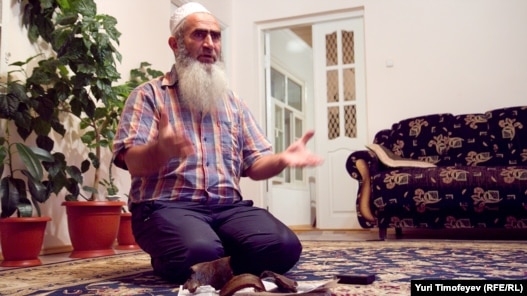
Gregory Feifer speaks to Rasul Magomedov (Father of a Suicide Bomber)
... Mention the Caucasus today and many Russians say they think of television news images of strewn corpses, smoke and bleeding victims such as those seen by millions of viewers after the subway attacks last year. And it's helping fuel deep suspicion and hatred.
This year, protesters in Moscow began rallying under the banner "Stop Feeding the Caucasus," demanding the government stop funding a region many see as hopelessly corrupt. Among the supporters, Sergei, a Muscovite who wouldn’t give his last name, echoes the views of many who say they also believe too many migrants from the North Caucasus are responsible for growing crime in the capital. "They get together in groups and attack people," he says, "mostly women after dark, for no reason."
Spreading Violence
Still, such fears haven't convinced most Russians the government should give up rule in the Caucasus, even though the current state of affairs is chiefly the result of the Kremlin's drive to maintain its grip on the region. Prime Minister Vladimir Putin first came to power in 2000 launching an invasion of breakaway Chechnya, vowing to kill Chechen terrorists wherever they were hiding. "If we find them in the toilet," Putin said, "we'll exterminate them in their outhouses." His slang-inflected promise helped make him the country's most popular politician. Putin has since exploited the threat of terrorism to consolidate power by abolishing the election of regional governors in favor of Kremlin appointments and cracking down on civil society and press freedom.
The village of Balakhani is nestled in the mountains of Daghestan
Chechnya, once bombed into ruins, was rebuilt under its feared, Moscow-appointed leader Ramzan Kadyrov. But violence has since spread to other previously stable neighbors such as Ingushetia and Daghestan, where militant attacks now take place virtually every week. And there are no signs they'll abate any time soon.
In Ingushetia, several hours away from Daghestan by car, the popular leader, President Yunus-Bek Yevkurov, is trying to forestall such attacks by prevailing on the security services to reduce the number of house searches and arrests in his region. But he says relations between people from the Caucasus and others are complicated by the hatred incited by public figures elsewhere in Russia who associate entire nationalities with criminality.
"Our young people tell me matters have reached a point where 'We avoid other groups of people on the street, not because we're afraid but because they'd pick a fight and we'd be blamed,'" he says. Yevkurov calls on the government to help break down stereotypes by regulating the media and punishing public figures who incite hatred.
But others say the problem lies deeper. Alexander Verkhovsky of Moscow's Sova Center for Information and Analysis says Russians in private speak far more negatively about the Caucasus than in public, and that they're steadily embracing nationalism. "Nationalists demand there be a common enemy," he says. "And the post-Soviet history of the Caucasus has led to the fact that that common enemy is the North Caucasus."
Back in Daghestan's village of Balakhani, Magomedov -- father of suicide bomber Mariam Sharipova -- says his daughter's act should have provided the authorities a huge wake-up call. "Change your attitude toward us Dagestanis," he says. "Don’t think we're stupid people."
But as Putin prepares to return to the presidency for at least another six years, Magomedov is deeply pessimistic about the future. A recent poll showed most Russians believe the authorities should undertake even harsher measures to fight militants in the Caucasus, such as reviving the death penalty and punishing their relatives. Many in the Caucasus fear that bodes badly for the entire country's stability.

